The Energy-Saving Myth of Keeping Every Door Closed
Learn when closing doors can save energy, when it can disrupt airflow, and how to manage unused rooms without making the rest of the home less comfortable.
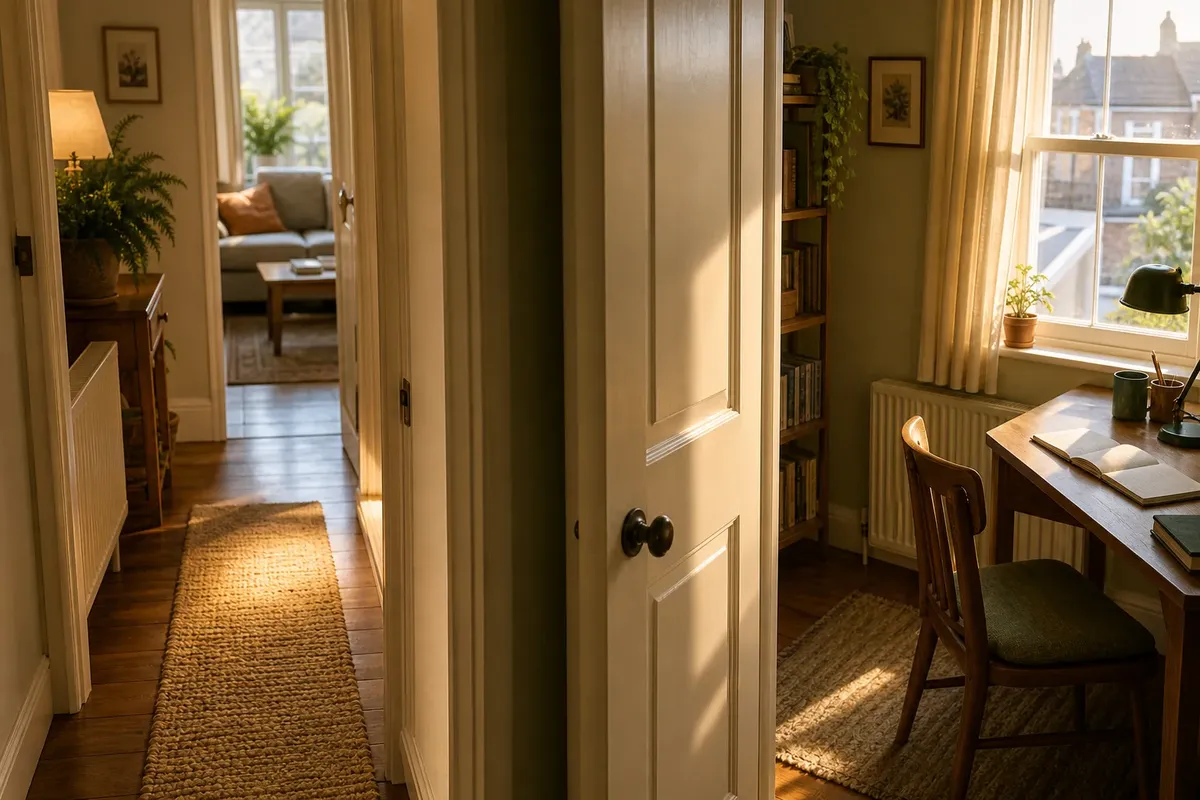
Learn when closing doors can save energy, when it can disrupt airflow, and how to manage unused rooms without making the rest of the home less…
Habits · 10 min read
You shut the spare-room door before settling beside the radiator, hoping to keep warmth where you are. That familiar energy-saving habit can help in some homes, but closed doors do not automatically reduce heating use. The result depends on where heat is supplied, how air moves and how the home is laid out.
Managing an unused room is different from sealing it off. A door changes the route that warm and cool air can take. It may help separate a room you do not need, or it may interfere with the circulation a heating system relies on. The useful question is not whether every door should be open or shut, but what happens when you change one.
Do closed doors save energy in every home?
No. Closing a door may help limit the movement of heat between rooms, but the effect depends on the heating system and the building. A room heated by its own controllable radiator is not the same as one that receives much of its warmth from air moving in from the hall.
With central heating, the thermostat usually responds to the temperature around it, not to every room independently. If the thermostat is in a hallway and doors are closed around it, the hall may warm or cool differently from the rooms where people spend time. The system can then switch off while a closed-off room still feels chilly, or continue running because the thermostat’s location remains cool.
Heat also moves through walls, floors, ceilings and gaps. A door can slow air exchange, but it cannot make a room independent of the rest of the house. The temperature difference across the boundary, the room’s insulation and the location of radiators all affect what you notice.
In a home with separate room controls, lowering the setting in a seldom-used space may be more direct than closing its door. In a home with one thermostat, controlling one room in isolation can be less predictable. Pay attention to how the whole system responds rather than assuming a shut door has reduced demand.
What does closing a door change about airflow?
A door narrows or blocks one route between rooms. That can reduce the movement of warm air from a heated room into a cooler one, but it can also restrict the return path that lets air circulate back towards the heating source. The same change may feel helpful in one layout and uncomfortable in another.
Airflow matters particularly when warmth is distributed through ducts, vents or a heat pump. If a room has a supply vent but little space for air to return, shutting the door can alter pressure and circulation. Some homes have a transfer grille, a door undercut or another designed route for air to move; others rely more heavily on open doorways.
Radiator-heated rooms have a different pattern. A radiator warms nearby air, which rises and circulates through the room. Closing the door can keep more of that air in the space, yet it may also leave the adjoining landing or hallway colder. If that colder area contains a thermostat, the heating may run for longer than expected.
Do not block vents, grilles or other intended air paths to make a room feel more sealed. Their purpose varies by system and home. If you are unsure what a vent serves, check the property information or ask a qualified heating professional.
Which rooms benefit from being kept separate?
A room with its own heat source and control is easier to manage separately than one that depends on warmth drifting in from elsewhere. A spare bedroom with a radiator valve, for example, can often be kept at a lower setting when unused, while its door limits direct mixing with a warmer corridor.
Rooms with large openings, shared air routes or open-plan connections are less easily separated. A door between a kitchen and a living area may reduce the spread of cooking smells, but the heating effect depends on where the radiators and thermostat sit. A door that is rarely closed, or that opens onto a space with no heating, may change comfort without meaningfully reducing energy use.
Think about use as well as equipment. A guest room occupied occasionally may need a different routine from a room used for laundry, work or storage. A bathroom may need ventilation after bathing; shutting its door can help contain moisture temporarily, but the room still needs its intended extraction or ventilation route to work.
Say you use a small study during the day, and it has a radiator with a working control while the hallway thermostat serves the rest of the home. You might try keeping the study door mostly closed during work, then compare how comfortable the study and hall feel over ordinary days. If the study becomes cold while the hallway remains warm, the useful adjustment may be the room control or heating schedule, not a stricter rule about the door.
How should you decide what to do with an unused room?
Start by noticing the room’s heat source and the way air reaches it. Then make one modest change at a time, so you can distinguish a helpful adjustment from a new source of discomfort.
- Check the heating control. If the room has a radiator valve or dedicated thermostat, see whether it can be adjusted independently. Follow the control’s markings and the heating-system guidance rather than guessing at its function.
- Locate the main thermostat. Note whether it is in the room you want to keep warm, a hallway or another shared space. A closed door can make the temperature around it less representative of the rooms you use.
- Look for designed air routes. Identify supply vents, return grilles and transfer grilles. Keep them clear, and do not treat a door gap or vent as an obstruction to remove.
- Notice which rooms feel different. Check the space you are leaving and the adjoining hall or room at different points in your usual routine. Comfort gives useful context that a single observation cannot.
- Consider moisture and fresh air. A seldom-used room still needs suitable ventilation, especially if it becomes damp or is used for drying clothes. A closed door is not a substitute for ventilation.
- Change one habit first. Try leaving one door open or closed during a normal period of use, while keeping the heating settings otherwise familiar. If comfort worsens elsewhere, reconsider the change rather than extending it to every room.
These checks are observations, not a demand for elaborate monitoring. A simple note on paper can help: which door position you used, which rooms felt comfortable and whether the heating seemed to behave differently. Keep the comparison grounded in ordinary household routines, not a single unusual day.
Does an open door make the heating work harder?
Not necessarily. An open door allows more air to mix between adjoining spaces, so warmth from one room may spread into another. Whether that increases heating demand depends on the temperatures involved, the rooms’ heat loss and how the heating controls respond.
If a warm living room opens onto a cooler, poorly insulated hallway, some heat will move towards the cooler space. Closing the door may reduce that exchange. But if the hallway contains the thermostat, allowing it to remain cooler might cause the heating to run longer. The outcome can therefore differ from the simple idea that less mixing always means less energy use.
An open door can also be useful when a room has no direct heat source. It may allow some warmth to reach that room from an adjoining space, although the temperature may remain uneven. This is a comfort trade-off, not a dependable way to heat an entire home.
Consider the pattern over time. If a room is only briefly occupied, the extra warmth it receives through an open door may matter less than the comfort of the main living area. If people move between rooms throughout the day, keeping every door closed may be impractical and could make the home feel fragmented.
Why can one closed door make the home less comfortable?
A closed door can create a larger temperature difference between a room and the spaces around it. That may be exactly what you want when a room is deliberately kept cooler, but it can be unpleasant if the room is occupied or if the adjoining hallway becomes cold.
In some homes, a closed door also changes how air returns to the heating system. A room may feel stuffy, a supply vent may become noisier, or the temperature may vary more from one part of the room to another. These signs do not prove that the door is the cause, but they are a reason to check the system’s intended airflow rather than closing more doors.
Moisture is another consideration. Bathrooms, kitchens and rooms used for drying clothes produce moisture that needs an appropriate route out. Shutting a door can contain humid air for a time, but it does not remove it. Use the room’s ventilation as intended and watch for persistent condensation or dampness.
Comfort is not just the number on a thermostat. Cold surfaces, draughts and uneven temperatures can affect how a room feels. If a door position seems to make one area more comfortable while another becomes unpleasant, treat that as a whole-home issue rather than a reason to impose a universal door rule.
When should a heating professional check the airflow?
Ask a qualified heating professional if closing a door causes a marked change in airflow, repeated discomfort or unusual behaviour from the heating system. This is especially sensible for systems with ducts, heat pumps, mechanical ventilation or controls you cannot identify confidently.
Persistent condensation, damp patches, unusual odours or a room that remains markedly colder than the rest also deserve attention. The cause might involve ventilation, insulation, controls or the heating system itself. A professional can assess the specific home and advise on suitable adjustments.
Do not alter ductwork, vents, electrical controls or heating equipment to compensate for a door problem. The right approach depends on the system and the home’s design. For a straightforward household decision, however, observing how one door affects comfort and control is a sensible first step.
What do people ask about keeping doors closed?
Should I close the door to a spare bedroom?
That can make sense if the room has its own controllable heat source and does not rely on air moving in from the rest of the home. Keep its ventilation needs in mind, and check that the change does not leave a thermostat-controlled hallway colder than expected.
Should doors stay open when the heating is on?
There is no single rule for every heating system. Leave doors open where rooms depend on shared air circulation, and consider closing them where you are managing a separately heated room, provided the intended airflow remains clear.
Can I turn off the radiator in an unused room?
It depends on the room, system and conditions in the home. Use the radiator control as intended, and avoid letting an unused room become damp or so cold that it affects adjoining spaces; seek professional advice if the system’s controls are unclear.
Is a closed door enough to keep a room warm?
No. It can reduce air exchange with adjoining spaces, but the room still loses heat through its boundaries and may lack a heat source. Insulation, draughts, glazing and the heating arrangement all influence how warm it feels.
What is the sensible rule for energy-saving door habits?
Close a door when separating a room suits its heating and ventilation, not because every shut door is assumed to save energy. Keep intended air paths clear, consider the thermostat’s location and notice how adjoining rooms respond.
For an energy-saving door habit that fits your home, begin with one room and one change. If the room stays comfortable and the rest of the house behaves as expected, the habit may suit that layout. If not, an open door or a different heating control may be the better choice.
Keep exploring
Why Heat Moves Towards Cooler Surfaces in a Room
Why heat moves towards cooler surfaces in a room explains chilly corners and warm patches, helping…
Curtains, Blinds, or Bare Glass: What Changes at the Window
Curtains, blinds, or bare glass each shape daylight, privacy and a room’s mood differently. Compare the…