Curtains, Blinds, or Bare Glass: What Changes at the Window
Curtains, blinds, or bare glass each shape daylight, privacy and a room’s mood differently. Compare the trade-offs to choose a window treatment that fits.
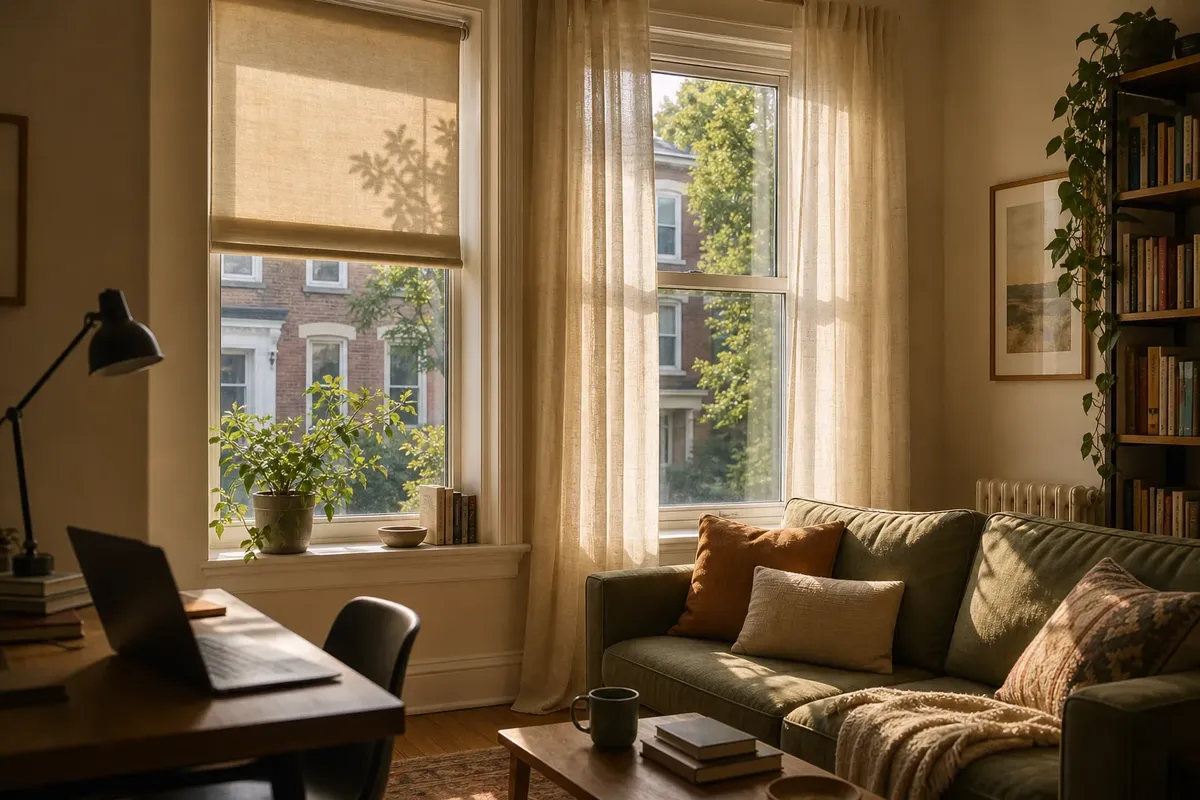
Curtains, blinds, or bare glass each shape daylight, privacy and a room’s mood differently. Compare the trade-offs to choose a window treatment that fits.
Daylight · 7 min read
On a bright morning, a sheer curtain can soften the glare on a kitchen table while leaving the garden visible. In the next room, a blind may keep a screen usable without darkening the whole space. Curtains, blinds, or bare glass change more than the view: they affect daylight, privacy and the feeling of a room in distinct ways.
There is no single best arrangement. The useful choice depends on what happens beside each window, how the room is used and which changes you want to make during the day. These five comparisons can help you decide.
1. Curtains spread and soften daylight
Fabric covers a broad area and can turn direct sunlight into a softer glow. A voile or other sheer fabric blurs hard edges while still admitting light. Heavier curtains can make the room feel more enclosed when drawn, which may suit a bedroom or a living room used for watching films.
The way curtains hang matters. A full-length pair gathers into soft folds and frames the view when open; a smaller panel may cover only part of the glass. If the curtain sits in front of a radiator or other heat source, it can also interfere with warmth reaching the room, so consider the layout rather than treating fabric as a purely visual choice.
Colour and weave alter the effect. Pale, translucent fabric tends to keep the window feeling bright, while a dense, dark textile creates a more pronounced visual boundary. A curtain can also add texture to a plain room, but a bulky heading or deep folds may make a narrow window appear more crowded.
2. Blinds offer adjustable control
Blinds let you change how much of the window is covered without moving a large panel of fabric. Venetian slats can be tilted to redirect light and reduce a direct view indoors. Roller blinds move between a raised position and a covered one, while Roman blinds fold into visible bands of fabric as they rise.
That adjustability suits spaces where light conditions shift during the day. A blind can be partly lowered to shade a work surface, or opened to restore the view. It may feel neater than curtains where the window is close to a desk, sink or shelf, though the hardware and chosen material contribute to the room’s appearance.
Different blind types behave differently. Slats create stripes of light and shadow; a continuous roller surface gives a more even screen. A translucent material maintains a sense of daylight, while an opaque one provides stronger visual cover. For a bedroom or bathroom, check how the particular product handles privacy after dark, since silhouettes and gaps can remain visible with some fabrics or fittings.
3. Bare glass keeps the view and the light open
Leaving glazing uncovered gives the clearest view and avoids placing fabric or a blind between the room and the outside. It can make a small room feel less visually busy, especially if the window has an interesting frame or overlooks a garden, courtyard or street scene that you enjoy seeing.
But bare glass does not provide a way to respond when the sun shines directly onto a screen or when a neighbour’s window becomes conspicuous after dark. It may be entirely comfortable in a private room with gentle light, and less suitable at a street-facing window where occupants want to change the view from inside. The decision is about the actual room and its surroundings, not a rule that uncovered windows are always simpler or better.
Think about the view at different times. A tree may provide a pleasant screen in summer but lose its leaves later; a bright sky can make a window feel exposed at night when the interior is lit. If you enjoy the openness but sometimes want cover, a discreet track or a compact blind can preserve the uncluttered look while leaving an option available.
4. Privacy changes with fabric, slats and the hour
Privacy is not a fixed quality of a window treatment. It depends on the direction of light, the distance to other homes, the height of the window and whether someone is looking in from the street. A sheer curtain may blur details during bright daytime conditions yet offer little privacy once lights inside make the room brighter than outdoors.
Blinds can offer more precise sightline control. Tilting slats may block a view from a particular angle while allowing daylight through, but their gaps can still matter from nearby or elevated windows. A roller blind or a lined curtain gives a more continuous screen when closed, although that usually means less view and less daylight too.
For an overlooked ground-floor room, consider where people sit and stand, not only the window’s centre. A partial covering, such as a lower panel or a blind that can stop at a chosen height, may keep the upper part of the view open. The best arrangement is the one that suits the sightlines you actually want to manage.
5. The frame and fabric shape the room’s character
A window treatment occupies a visible area, even when it is open. Curtains introduce folds, colour and movement; blinds add a defined edge and can make a window feel orderly; bare glass gives greater prominence to the frame and the view beyond it. These differences can help a room feel softer, more composed or more open.
Consider the materials already present. Linen-like fabric can sit comfortably with timber furniture and textured rugs, while a simple roller blind may suit a room with clean lines and limited wall space. A patterned curtain can become a strong feature, so it may compete with patterned upholstery or artwork. Where the room already has many visual details, a quieter treatment can let them breathe.
Imagine a reader with a street-facing sitting room, a screen beside the window and a deep window recess. They want daylight in the morning, less screen glare in the afternoon and privacy after dusk. A light-filtering roller blind might address the glare, with curtains added only if they want more softness or a fuller evening screen; the expected visible result is a room that can shift between an open view and a more sheltered setting without relying on one fixed arrangement.
Which window treatment suits the room?
Are curtains or blinds better for a room with a screen?
Either may work, depending on the sun’s angle and where the screen sits. A blind can be lowered or tilted to manage direct glare, while a sheer curtain softens light across a broader area.
Can sheer curtains provide privacy at night?
They may obscure details in daylight but often provide limited privacy when a lit room is brighter than outside. Check the view from the nearest public or neighbouring vantage point after dark, and add a denser layer if needed.
Do bare windows make a room feel larger?
Uncovered glass can reduce visual clutter and keep the view unobstructed, which may make a room feel more open. The effect depends on the frame, the view and whether the room feels exposed without a covering.
Can curtains and blinds be used together?
Yes. A blind can handle adjustable light and sightlines while curtains add texture or a more complete screen when drawn. Keep the combination proportionate to the window and make sure each layer can move freely.
Choose for the moments that matter
Start with a simple question: when do you want the window to feel open, and when do you want it to recede? Watch how daylight falls on the places where you read, cook or work, and notice when passers-by or neighbouring windows can see in. You do not need to choose one treatment for every room.
For a window used differently through the day, an adjustable blind or a layered arrangement may be more useful than a fixed screen. For a quiet room with a welcome view and little need for privacy, bare glass can be a deliberate choice. Curtains, blinds, or bare glass are options to match to the room’s changing uses; the right fit is the one that gives you the light, privacy and atmosphere you want at the times you need them.
Keep exploring
Why Heat Moves Towards Cooler Surfaces in a Room
Why heat moves towards cooler surfaces in a room explains chilly corners and warm patches, helping…

Before the Thermostat: How Heating Changed the Shape of a Home
Household heating history shows how hearths, stoves and central systems shaped home layouts, fuel use and…