A Winter Daylight Walk Through Your Home
A winter daylight walk helps you spot low sun, glare and useful bright patches, then match everyday activities to the light each room actually receives.
A winter daylight walk helps you spot low sun, glare and useful bright patches, then match everyday activities to the light each room actually receives.
Planning · 6 min read
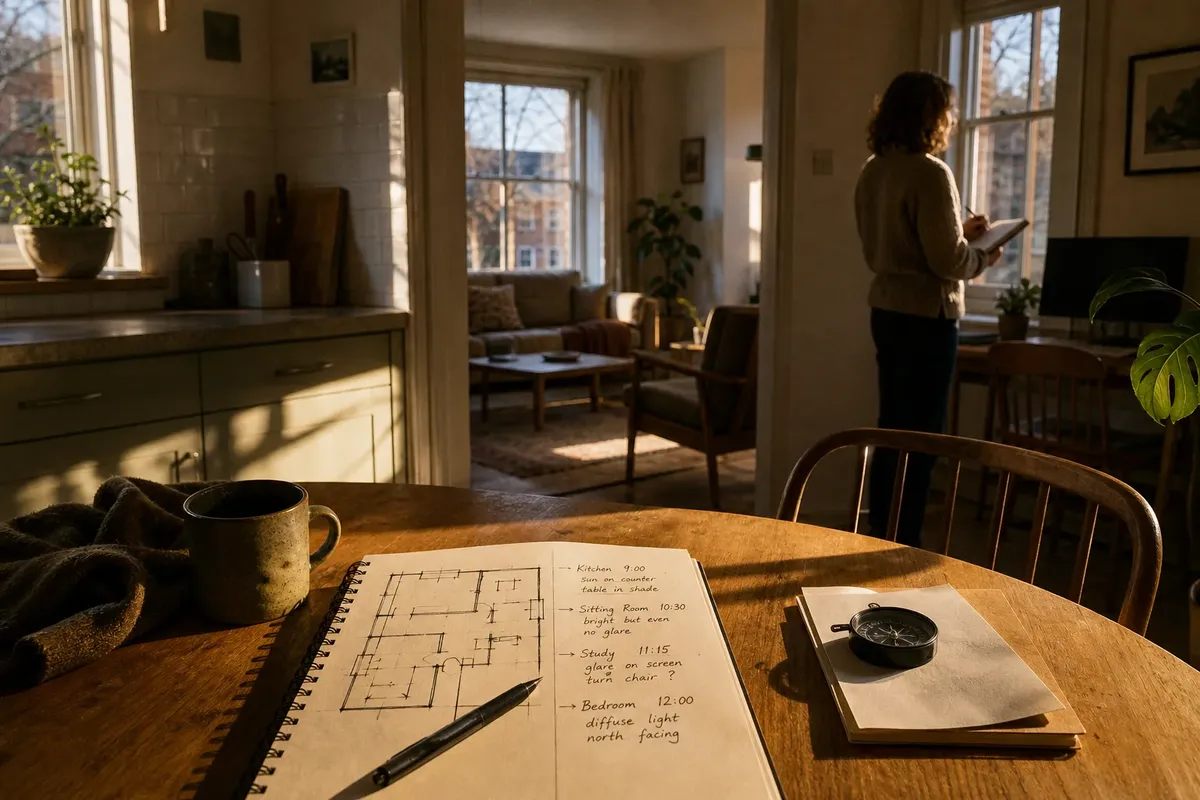
A winter daylight walk can begin beside the kitchen table, when a stripe of sun lands on the place where someone usually reads the post. In a few minutes it may shift to the floor, while the room’s other corner stays dim. Noticing these changes room by room can help you choose where to read, work or eat without mistaking one bright moment for the whole day.
Take a slow pass through the home on a clear winter day, then repeat it when the sky is overcast. You need only a notebook and a simple floor plan, even one sketched on scrap paper. Record where daylight reaches, what obstructs it, and whether it feels comfortable for the activity you have in mind.
Start with a route and a few observations
Choose a route that follows your ordinary day: perhaps bedroom, bathroom, kitchen, sitting room and workspace. For each room, look from the places where people actually sit or stand, not only from the doorway. A window may seem bright at its centre while the chair beside it receives little direct light.
On your sketch, mark the windows and note the time of each visit. Add a simple description such as “sun on table”, “bright but even” or “glare on screen”. If you know which way a window faces, include that too; a compass app can help, but it is not essential to the walk.
Keep the first pass observational. Avoid moving furniture or changing window coverings before you have noted the usual conditions. Otherwise, it becomes harder to tell whether the daylight pattern comes from the room, the weather or a change you made.
Morning rooms can feel bright in the wrong place
A common snag is a sunny patch that misses the activity. Low winter sun may reach a wall or a clear stretch of floor but not the breakfast seat. The window’s orientation, neighbouring buildings, trees and the angle of the sun all affect where light falls.
Look for the path of the bright patch rather than judging the room from its general brightness. Does it reach a work surface, a chair or a spot where children play? Does it disappear before the room is usually used? Note the answer beside the time, then consider whether a small change of activity or seating would make better use of that light.
Say you notice that the kitchen table is in shade during breakfast, while a nearby counter catches morning sun. You could try preparing a quiet task at the bright counter and leave the table for eating, then observe whether the arrangement suits the household. The useful result to look for is a more comfortable place for that task, not a promise that the room will stay sunny.
Glare can make a bright room hard to use
Another problem is strong light on a screen, glossy worktop or polished table. The room may look inviting, yet the glare makes reading or computer work tiring. Reflections often shift as the sun moves, so note both the surface affected and the time it happens.
Try viewing the room from the activity’s usual position. If a screen catches a reflection, check whether turning the chair or moving the screen to another part of the desk helps. For paper tasks, a seat angled away from the direct beam may be more comfortable. These are small placement choices, not a reason to assume the brightest spot is always the best one.
If glare is brief, a different task may fit that patch of sun better. A sunlit chair can suit a short conversation; a shaded desk may be easier for close work. Record what feels workable rather than labelling the whole room either bright or dark.
Some rooms stay dim despite clear skies
A north-facing room, a deep window reveal, an overhang or a nearby building can leave a room with little direct sun. Overcast weather can soften the contrast but will not necessarily make the room feel bright. Note whether the room receives diffuse daylight from the whole window or remains gloomy even near it.
Check the view from more than one point. A tall bookcase, a large plant or a door left open may alter how light spreads within the room. You can record these as observations without shifting heavy furniture during the walk. If you later consider rearranging a room, keep routes and everyday access in mind.
Where a room has a dependable but modest level of daylight, match it to tasks that do not need a sunbeam. Sorting laundry, listening to music or storing items may fit better there than detailed reading. A separate task light can support close work; daylight observations help you choose where it is most useful, rather than replacing appropriate lighting.
Check the pattern again before changing the room
One visit can mislead. A passing cloud, a bare tree or a neighbour’s temporary activity may alter what you see. Repeat the route at another time of day and on a different kind of winter day. A brief note each time is enough to reveal whether a bright patch is regular or occasional.
Use a simple record with these prompts:
- Room and usual activity: where do people sit, work or gather?
- Time and sky: was it sunny, cloudy or changing?
- Light location: which surface or seat received direct sun?
- Glare: did light reflect into eyes or onto a screen?
- Obstruction: did a building, tree, reveal or furnishing appear to limit light?
- Possible adjustment: could a task, chair or movable object change position?
Where a proposed change concerns a fitted window covering or a building alteration, follow the product maker’s instructions and any applicable local requirements. For ordinary furniture choices, try one modest adjustment at a time and revisit the room under similar conditions.
What should you look for during the walk?
When is winter sunlight most useful?
It is useful when it reaches a place where you are already comfortable doing a task. Note its timing and duration in plain terms, then compare that with your household’s routine.
How can you tell direct sun from general daylight?
Direct sun forms a distinct bright patch or sharp shadow; general daylight tends to spread more evenly. A window can provide plenty of diffuse light without a beam reaching the room.
What should you do if glare shifts during the day?
Record when and where it occurs, then consider moving the activity or changing the angle of a chair or screen. Recheck later, since a position that works in the morning may not suit the afternoon.
Does a cloudy day make the walk pointless?
No. It shows how the room behaves without direct sun and can reveal which spaces rely on a brief sunny patch. A second visit in clearer weather gives a fuller picture.
Use daylight where it fits, not where it looks best
The most useful outcome of a winter daylight walk is a clearer match between a room’s changing light and the things done there. A sunny floor may be pleasant without being useful for reading; a quieter, evenly lit corner may suit that better. Keep the notes modest and specific. Once you know when a patch of daylight appears, you can place an activity there when it makes sense—and stop expecting a room to behave as though the sun stood still.
Keep exploring
Why Heat Moves Towards Cooler Surfaces in a Room
Why heat moves towards cooler surfaces in a room explains chilly corners and warm patches, helping…

Curtains, Blinds, or Bare Glass: What Changes at the Window
Curtains, blinds, or bare glass each shape daylight, privacy and a room’s mood differently. Compare the…