Before the Thermostat: How Heating Changed the Shape of a Home
Household heating history shows how hearths, stoves and central systems shaped home layouts, fuel use and daily routines, helping you judge what suits your rooms.
Household heating history shows how hearths, stoves and central systems shaped home layouts, fuel use and daily routines, helping you judge what suits your rooms.
Heat · 7 min read
On a cold evening, someone carries another log into the sitting room while the kitchen door swings shut behind them. Household heating history is visible in choices like these: where a home concentrates warmth, how much fuel it needs, and which rooms its occupants can use comfortably.
Hearths, room stoves and central systems are not simply stages in a story of progress. Each distributes heat differently and asks something different of the building and the people living in it. Looking at those differences can help explain why an old house may have a warm main room and chilly outbuildings, or why a modern heating system still leaves some spaces unused.
Open hearths concentrated warmth and pulled air through the room
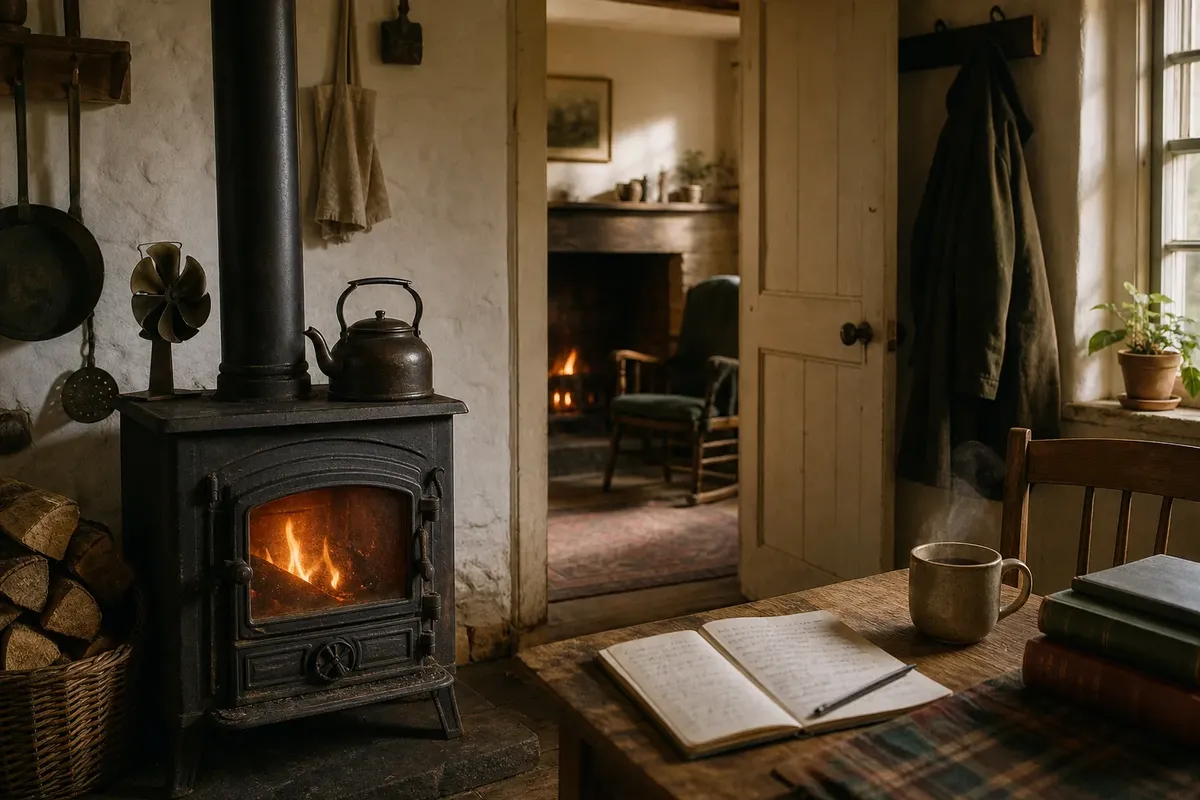
In many houses in parts of Britain and Europe before enclosed stoves and central systems became common, an open hearth served as a source of heat and, in some homes, a place for cooking. Its role varied with region, period, building design and household resources; it was not a universal arrangement.
An open fire gave off radiant warmth close to the flames, while the chimney carried smoke away. The room’s shape, the opening and the chimney all affected how the fire behaved. Air drawn towards the chimney could bring cold air in through gaps elsewhere in the building, so comfort depended partly on the room’s construction as well as the fire.
That arrangement concentrated activity near the hearth. It also meant a household had to manage fuel, ash and the fire itself. From a building-performance perspective, the important point is not nostalgia for the flame: a local source could leave distant rooms cold and allow warm air to escape up the chimney.
Room stoves changed how a building held and used heat
An enclosed stove placed a fire behind a solid body, often cast iron, with smoke carried through a flue. Depending on its design and installation, the stove could heat the room around it and sometimes support cooking. Compared with an open hearth, it made the source more contained, though warmth still centred on the room where the appliance stood.
A stove also changed the way occupants interacted with the building. A household could heat a frequently used kitchen or living room without trying to make every space equally warm. But fuel still needed handling, and the stove and flue needed appropriate care. A local source was not automatically an efficient choice: the result depended on the appliance, the fuel, the building and how the heat was used.
Imagine a household in a draughty cottage with a stove in the kitchen, a rarely used parlour and no central system. They note that the kitchen is occupied through the day, while the parlour is used only for occasional visits. They decide to use the stove for the kitchen and keep the parlour door closed when it is empty. The observable result they expect is a more usable kitchen without spending fuel to warm a seldom-used room; the trade-off is that the parlour remains cold, and the choice would not suit someone who needs both rooms comfortable at the same time.
Central systems connected heat to the building layout
Central heating moved the heat source away from the room where warmth was needed. Boilers or other sources could supply radiators or underfloor circuits in several rooms. This made it possible to distribute heat through a building without tending a separate fire in each space.
That shift changed more than the appliance. Pipes and emitters became part of the building’s fabric, while controls offered ways to set operating periods or temperatures. The system could support a household moving between rooms, but its usefulness depended on its layout, condition and settings. A central system also needed energy and maintenance; the controls did not remove those demands.
For an energy-saving home, the comparison is therefore about more than whether heat is local or central. Consider which rooms are used, how easily warmth escapes, whether doors and windows can be improved, and what existing equipment can serve. A building with an ageing boiler and poor insulation presents different decisions from a well-insulated flat with a sound heat pump. For system changes or work involving combustion, seek a qualified heating professional and follow the manufacturer’s instructions and local requirements.
Choose by matching heat to rooms and routines
A simple room-use record can turn a broad preference into a specific decision. For several ordinary days, note which rooms are occupied, when doors are usually open, and where occupants report draughts or lingering cold. Do not treat this as a technical energy audit; it is a way to identify the pattern a heating approach must serve.
- If the household spends most waking hours in one room, then consider whether a safe, suitable local source can serve that space; if several rooms need warmth together, compare systems that distribute heat between them.
- If fuel is already stored and someone can manage regular tending, then a stove may fit the routine; if nobody can take on that work, prioritise a system with controls that match the household’s availability.
- If the room loses warmth through obvious gaps, then address draughts and seek suitable advice before relying on a larger heat source; if the building is already relatively airtight, consider how the current system serves each occupied room.
- If a chimney or flue is present, then have its suitability checked before using an appliance that depends on it; if there is no appropriate flue, rule out appliances that require one.
- If the existing central system serves the rooms people use, then review its controls and operating pattern before replacing equipment; if it does not, ask a qualified professional to assess possible changes.
- If several rooms are used at different times, then consider whether room controls and a suitable schedule can match that pattern; if the household’s routine varies unpredictably, favour controls that occupants can adjust easily.
What should you compare before choosing?
Does a local stove suit an energy-saving home?
It can suit a household that regularly uses one main room and has an appropriate appliance, flue and fuel arrangement. Its effect on energy use depends on the building and how it is operated, so have installation and ventilation questions assessed by a qualified professional.
Can central heating serve rooms that are used at different times?
Central systems can supply several rooms, and suitable controls may help align operation with occupancy. The actual result depends on the system design, controls and the building, so check the manufacturer’s instructions and seek professional advice where settings or alterations are unclear.
What should you improve before changing the heat source?
Start by noting draughts, gaps around doors and windows, and rooms that are difficult to keep comfortable. Suitable draught-proofing or insulation work may change what a home needs, but ventilation and moisture must be considered; consult a qualified professional for building-specific work.
How do you compare the household workload?
List the recurring tasks each option involves: buying and carrying fuel, clearing ash, arranging maintenance, adjusting controls or booking servicing. If a task has no willing person to do it, treat that as a reason to consider another approach rather than assuming it will happen.
Building details still shape the heating choice
Older heating arrangements left a clear mark on homes: a large chimney breast, a former stove position, or a room whose doors once helped keep warmth close. Those features can explain the layout, but they do not tell you whether an old appliance is safe or suitable to use. Have uncertain equipment inspected rather than relying on its appearance.
Household heating history also offers a practical lesson for current homes. A heat source works within a building, not apart from it. The rooms people occupy, the paths heat can take, the air a system needs and the work required to operate it all influence whether an arrangement is comfortable and manageable.
To use household heating history as a guide, begin with one ordinary day: note where people sit, work and sleep, then identify the rooms that need warmth at those times. That record can make a conversation with an installer more focused—and help distinguish a heating problem from a draught, a poorly used room or a mismatch between the system and the household’s routine.
Keep exploring
Why Heat Moves Towards Cooler Surfaces in a Room
Why heat moves towards cooler surfaces in a room explains chilly corners and warm patches, helping…